
新产品
[ET Column] GaN Power RF Semiconductors — When Is the Optimal Time to Launch?
sigetronics
2026-02-12
浏览数 784
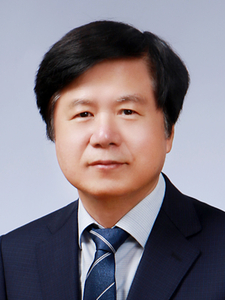
<Cho Deok-ho, Head of Research Institute, Sigetronics>
Gallium Nitride (GaN), based on its uniquely superior material properties, has long been regarded as a next-generation Power RF semiconductor. Its high power density, high-frequency performance, and excellent efficiency make it particularly attractive for military communications, radar, satellite communications, and data center power systems. However, despite its strong technological potential, industrial growth has not met expectations. It is now time to objectively reassess the technological maturity and market structure of GaN Power RF semiconductors and to revisit the question of optimal Time-to-Market.
GaN-based light-emitting diodes (LEDs) have formed a global market worth approximately KRW 50 trillion. In contrast, GaN RF semiconductors, despite being adopted in wireless and satellite communications for more than 20 years, remain at a market size of around KRW 3 trillion. Power applications, which entered primarily through small chargers about five years ago, are still in their early stages, with a market size of roughly KRW 1 trillion. This clearly reveals a gap between GaN’s technological excellence and its actual market expansion.
The constraints on market growth are multifaceted. Within the limits of absolute market size, competition with existing high-voltage and high-frequency semiconductors such as silicon (Si), silicon carbide (SiC), and gallium arsenide (GaAs) has intensified. Technical challenges, including durability in high-voltage environments and long-term reliability, have also slowed GaN adoption. As a result, many venture companies that led GaN Power RF technology over the past two decades have either ceased operations or disappeared through mergers and acquisitions.
Recently, TSMC, the world’s largest foundry and a technology leader, announced that it would discontinue its GaN foundry business starting in 2025 and transfer it to a global foundry company. This symbolically signals that the market is entering a structural transition phase. At the same time, traditional semiconductor giants such as Texas Instruments, Infineon, MACOM, and Renesas are aggressively absorbing GaN-related companies and technologies, backed by capital strength and market dominance. This suggests that the GaN semiconductor industry is moving beyond the venture-driven era and entering an industrialization phase led by small and mid-sized enterprises.
From the perspective of large corporations, the situation is even clearer. To justify large-scale investment, at least two or three global players would each need to secure annual markets exceeding KRW 3 trillion. However, the current GaN Power RF market has not yet reached this scale. Therefore, full-scale entry by major corporations remains premature, and predicting the appropriate timing is difficult.
The challenge is particularly serious for Korea. Domestic GaN semiconductor technology remains at the venture stage, and the technological gap with leading countries may widen within the next five years. If this window closes, organic growth through incubation will effectively become impossible. There is a real risk of repeating the past failures experienced in the GaAs compound semiconductor industry.
Today, GaN Power RF semiconductors extend beyond military communications and radar to naval vessels, fighter jets, and missile systems, playing a decisive role in modern warfare. As international sanctions and technology competition intensify around strategic weapons, localization and technological protection of GaN semiconductors are essential for securing competitiveness in advanced defense exports. Furthermore, the rapid expansion of AI data centers and the resulting surge in electricity demand and energy efficiency challenges have emerged as critical issues affecting national competitiveness.
The solution cannot be achieved through voluntary investment by a single company or short-term, performance-driven R&D. A government-led initiative is required initially, with a structure designed for eventual transition to private-sector leadership. A GaN FAB-based core platform covering everything from R&D to mass production must be established. From the early stages, private participation is essential, and at least five years of sustained investment, significant operational funding, and highly skilled experts will be required to build a self-sustaining ecosystem. The optimal Time-to-Market is not some distant future—it is to begin preparations now and secure a visible mass-production system within the next five years. Otherwise, structural dependence on overseas sources for critical semiconductor technology will inevitably persist.
ETNews, February 12, 2026
- 新建信件
- 没有新的投稿。
하단영역

公司名 : Sigetronics, Inc.
地址 : 497, TechnoValley-ro, Bongdong-eup, Wanju-gun, Jeonbuk, Korea
电话 : 82-63-262-4650 传真 : 82-63-262-4660 邮箱 : sales@sigetronics.com
COPYRIGHT©2022 SIGETRONICS. ALL RIGHTS RESERVED.
电话 : 82-63-262-4650 传真 : 82-63-262-4660 邮箱 : sales@sigetronics.com
COPYRIGHT©2022 SIGETRONICS. ALL RIGHTS RESERVED.
